Key Takeaways
- The pure black coat is caused by a recessive gene (a/a), meaning both parents must carry the gene.
- Black GSDs belong to the standard breed; they are not a separate breed or a mix.
- Coat color does not affect temperament — behavior is determined by the specific bloodline (working vs. show).
You’ve seen one in person and something stopped you.
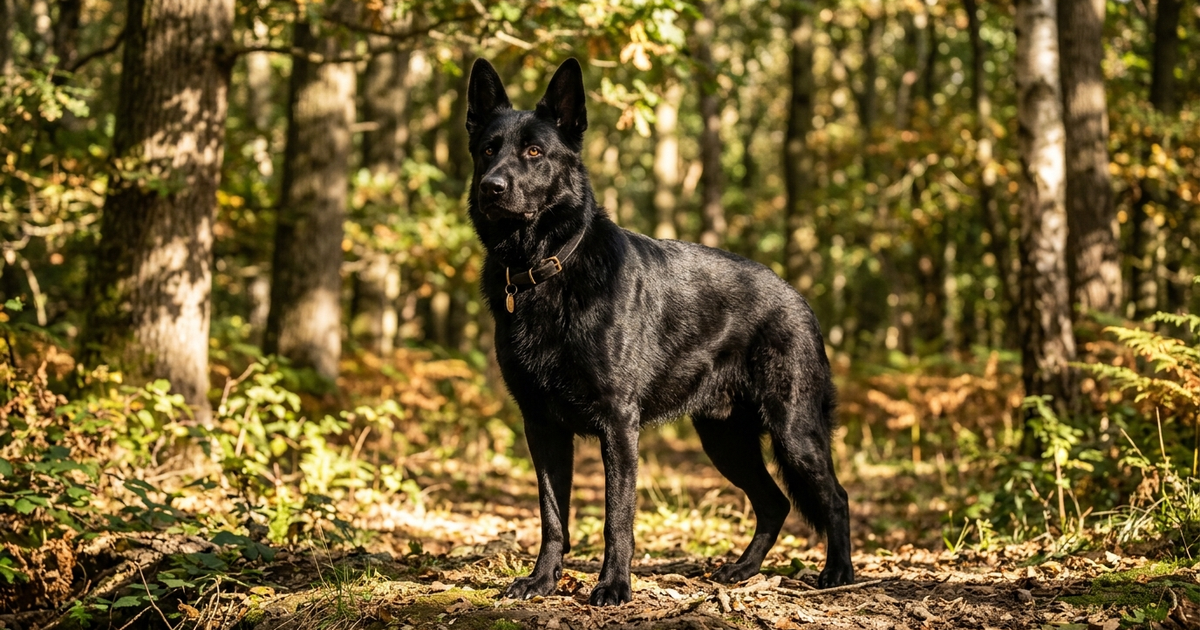
Maybe it was the way the light hit that coat — solid, deep black, no saddle, no tan points, just pure midnight from ears to tail. Maybe it was the weight of the stare, the silence of a dog that seemed to be running calculations about you. Whatever it was, you needed to know more.
Black German Shepherds are genuinely different — but not in the ways most people assume. They’re rare. They’re striking. And they’re surrounded by myths that might actually steer you wrong if you’re considering one.
Let’s clear it all up.
Are Black German Shepherds a Separate Breed?
No. Full stop.
A black German Shepherd is a purebred German Shepherd with a specific coat color variation. Same breed, same AKC registration, same conformation standard. The only thing that’s different is the pigmentation.
What confuses people is how consistently different they look from the typical tan-and-black saddle GSD most people picture. That consistency comes from genetics — specifically, a recessive gene that has to align perfectly for solid black to express.
The Genetics Behind the Black Coat
Here’s why black German Shepherds are rare: they require a specific combination of genetic factors that doesn’t happen by accident.
The solid black coat is primarily produced by the “a/a” allele at the A (agouti) locus. For a puppy to express this all-black phenotype, both parents must carry and pass on this recessive allele. If even one parent contributes a different A-locus allele — for sable, saddle, or bicolor patterns — the black coat won’t express.
This is why you can breed two non-black German Shepherds and still produce black puppies, if both parents happen to carry the recessive allele unexpressed. And why two carriers don’t guarantee black offspring — the odds follow standard Mendelian inheritance.
Key genetic facts:
- Only 6.8%–10% of all German Shepherds are born with a solid black coat
- Both parents must carry the recessive allele — carriers don’t show the black color themselves
- Black is fully recognized by the AKC, the SV (German breed federation), and most international registries
- The color is not a defect, not a disqualification, and not a sign of crossbreeding
🔍 Reddit Insight: One of the most common questions on r/germanshepherd is whether a black GSD is “really purebred.” Experienced owners and breeders consistently shut this down: the black coat is no different from other recognized GSD colors. What they do note is that black GSDs are more frequently found in working line bloodlines (DDR, Czech), which may partly explain why they seem more intense — it’s the line, not the color.
Are Black German Shepherds More Aggressive?
No. Coat color does not influence temperament.
This myth gets a lot of traction online — usually from people who encountered an intense, high-drive black GSD and connected the dots in the wrong direction. Here’s what’s actually happening:
Black German Shepherds are disproportionately found in working line bloodlines, particularly DDR (East German) and Czech lines, which were bred for defense, patrol, and high-drive tasks. Working line dogs are inherently more intense than show line dogs (see our full breakdown of all 5 GSD bloodlines).
So the pattern is:
- Black coat → more likely from working line → working lines have higher drive → “black GSDs seem more intense”
Remove the coat color from the equation and the conclusion reverses: it’s the bloodline, not the color.
🔍 Reddit Insight: r/germanshepherd threads on black GSD temperament consistently note that black coat alone predicts nothing — bloodline predicts everything. A black GSD from a West German Show Line breeder will behave very differently from a black GSD from a DDR working line. “Same color, completely different dog,” as one owner put it.
Physical Characteristics
Beyond the coat, black German Shepherds do exhibit some minor physical tendencies worth knowing:
- Size: Black GSDs trend slightly larger on average — roughly 24–26 inches at the shoulder, 75–100 lbs. This is partly the working-line influence and partly that larger dogs more often carry the recessive genetics.
- Back structure: Working-line black GSDs have a straighter, more level back than show-line GSDs. No dramatic rear slope.
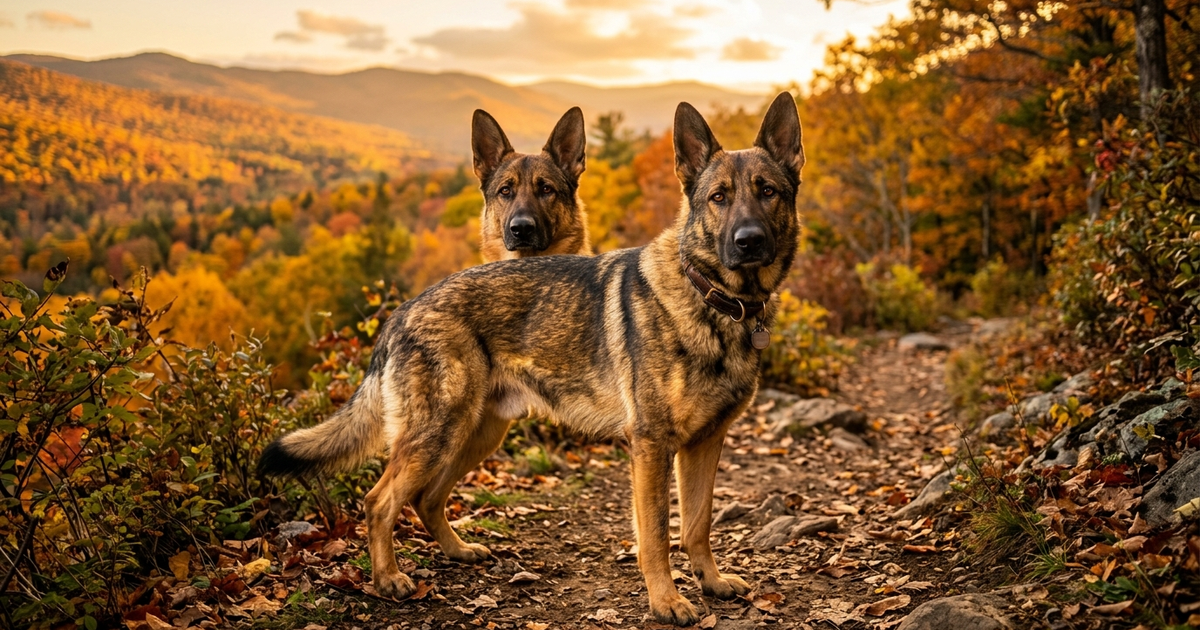
- Coat texture: The solid black coat often appears denser and shinier than a tan-and-black saddle coat. It can also show brindle-type patterns in sunlight.
- Sun fading: Some black GSDs develop a reddish-brown tint on their coat in summer, especially dogs that spend a lot of time in direct sun. This is normal — the coat typically returns to black in cooler months.
Temperament: What to Actually Expect
Since temperament is determined by bloodline, not color, the real question is: which line does your black GSD come from?
Working line black GSD (DDR, Czech, West German Working):
- High drive, needs a job or a sport
- Intensely loyal to primary handler
- Reserved with strangers by default
- Requires experienced, consistent ownership
- Needs 2+ hours of structured activity daily
Show line black GSD (West German Show, American Show):
- More relaxed, adaptable, family-oriented
- Still protective and intelligent
- Better suited to active families without professional training backgrounds
- Still needs solid exercise and mental engagement — just not at working-dog intensity
The confusion in online discussions usually comes from people who bought a working-line black GSD expecting show-line energy. That mismatch produces the “they’re aggressive!” anecdotes.
How Rare Are Black German Shepherds — and What Do They Cost?
With only 6.8%–10% of GSDs expressing solid black, they’re genuinely uncommon — not mythically rare, but rare enough that most people will go years without encountering one.
That rarity affects pricing:
- Black GSD from show line breeder: $2,000–$4,000
- Black GSD from working line breeder: $2,500–$5,000+
- DDR black GSD with documented pedigree: $3,000–$6,000+
Waiting lists are common. Reputable breeders who specialize in black GSDs often have buyers committed before a litter is even conceived.
Red flag: If you find a black GSD puppy advertised cheaply with no health testing, no pedigree documentation, and immediate availability — walk away. The price reflects the genetics, the health screening, and the rarity. Cut-rate black GSD puppies usually come from puppy mills banking on the color’s visual appeal.
Grooming and Care
Black German Shepherds have the same double-coat maintenance requirements as any GSD — just with one notable quirk:
Black fur shows on every surface you own.
Furniture, car seats, dark clothing — every fiber magnetically attracts that black coat. Invest in a quality undercoat rake (the Furminator or a comparable deshedding tool) and expect to brush 2–3 times per week. During spring and fall shedding seasons, bump that to daily. For a deep dive into the standard double-coat grooming routine, see our short-haired GSD care guide.
Other care requirements mirror standard GSD needs:
- Exercise: 60–120 minutes daily depending on bloodline
- Mental stimulation: Puzzle feeders, training sessions, scent work
- Nail trimming: Monthly (black nails don’t show the quick, so use caution)
- Ear checks: Weekly — GSDs are prone to ear buildup
🔍 Reddit Insight: Black GSD owners on r/germanshepherd consistently report that the shedding surprised them even after researching. One owner described their previous show-line GSD shedding as “manageable” but their DDR black GSD’s shedding as “a coat-growing factory.” Line matters here too — thicker-coated working lines shed more than shorter-coated dogs.
Is a Black German Shepherd Right for You?
Ask yourself these questions honestly:
You’re probably a good fit if:
- You have experience with high-energy, intelligent breeds
- You can commit to genuine daily exercise and mental engagement
- You want a visually striking, deeply loyal companion
- You don’t mind being a constant source of fascination at the dog park
You might want to reconsider if:
- You’re a first-time dog owner expecting an easygoing pet
- Your living situation limits outdoor access or exercise time
- You want a dog that’s immediately friendly with everyone
- You’re not prepared for the grooming reality
If you’re genuinely drawn to this breed variant and the lifestyle fits, a black GSD is one of the most rewarding dogs you’ll ever own. That presence — the way they carry themselves — is something that photographs don’t fully capture. You have to experience it.
Frequently Asked Questions
Are black German Shepherds recognized by the AKC?
Yes. The AKC recognizes solid black as a standard, acceptable German Shepherd color. They can compete in conformation shows, agility, obedience, and any AKC event a standard GSD can enter.
Do black German Shepherds have health problems?
No more than any other GSD color. The recessive gene responsible for the black coat has no known association with health conditions. Health risks are determined by bloodline and breeding practices — not color. Always ask for OFA hip and elbow certifications.
Can two non-black German Shepherds produce black puppies?
Yes, if both parents are carriers of the recessive a/a allele. The parents won’t show the black color themselves, but each puppy has a statistical chance of expressing it depending on which alleles they inherit.
Why does my black GSD’s coat look brownish in the sun?
This is normal and common. UV exposure breaks down the melanin in the coat temporarily, producing a reddish-brown tint. The coat typically recovers its deep black color as the sun-exposed fur sheds and new growth replaces it. Antioxidant-rich diets and fish oil supplementation can help coat pigmentation over time.
Are black German Shepherds good family dogs?
Yes — with the right bloodline and the right preparation. Working-line black GSDs are loyal, protective, and trainable, but require experienced handling and significant daily engagement. Show-line black GSDs are often more adaptable to family life. The key is matching the bloodline to your actual lifestyle, not just falling for the appearance.
Sources and Further Reading
- American Kennel Club German Shepherd Dog breed standard and color references.
- Orthopedic Foundation for Animals hip and elbow screening guidance for German Shepherd Dogs.
- PennHIP canine hip dysplasia screening overview.
- German Shepherd Dog Club of America breed education and health resources.
- UC Davis Veterinary Genetics Laboratory coat color and agouti genetics references.
Ready to find your perfect GSD match?
Take our 2-minute behavioral quiz. We'll match your lifestyle (and patience level) with the exact GSD bloodline and coat type you need — before you bring home a land shark.
Take the Matching Quiz →