Key Takeaways
- Sable is the original color of the German Shepherd breed (the agouti gene).
- Sable puppies change color dramatically as they mature; you cannot predict their adult shade at 8 weeks.
- The sable pattern consists of banded hairs, meaning each individual hair has multiple colors along the shaft.
Most people can’t identify a sable German Shepherd on sight. That’s ironic — because sable is the original color the breed was built on.
The very first registered German Shepherd, Horand von Grafrath, was sable. Max von Stephanitz chose him not for his color but for his working ability — and the agouti pattern he carried is the exact same gene wolves wear. It’s the genetic default of the species.
But here’s what catches new owners completely off guard: sable GSDs change color dramatically as they grow. The golden puppy you brought home at 8 weeks may look like a completely different dog by 18 months. Darker. Richer. A depth that photos simply can’t capture.
Understanding the sable coat means understanding the most genetically complex color expression in the entire breed. Let’s break it down.
What Makes a Sable GSD “Sable”?
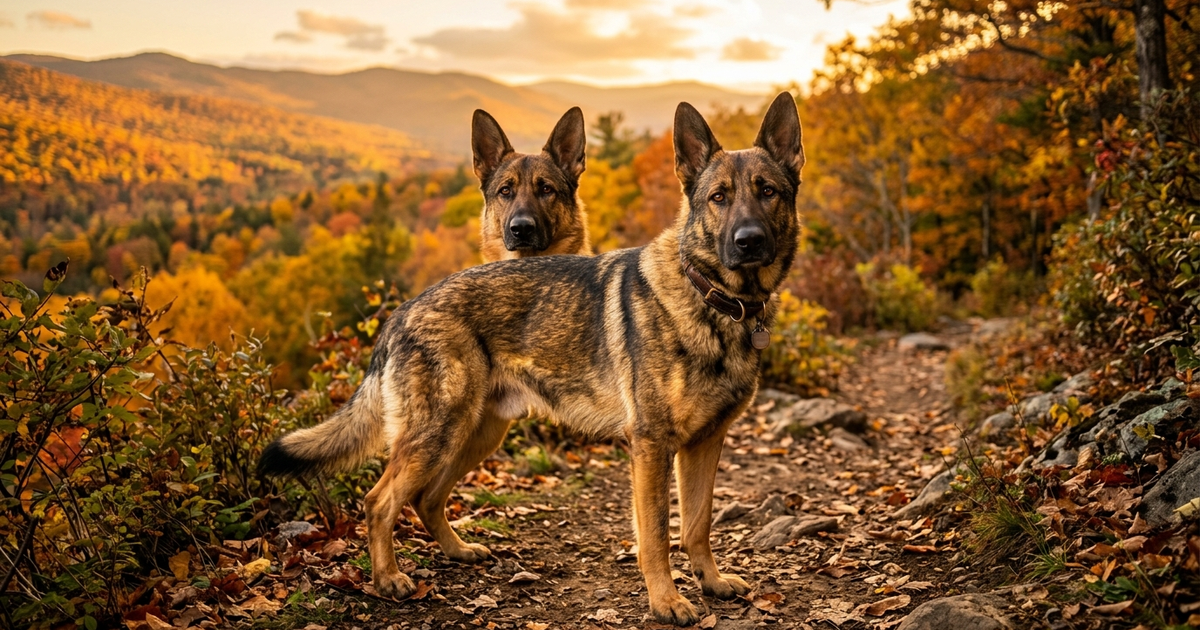
Sable isn’t a single color — it’s a banding pattern. Each individual hair carries multiple bands of color:
- Light base (cream or tan) near the skin
- Dark tip (black or dark brown/gray)
- Sometimes a middle band of rich red or tan
This banding is called the agouti pattern, controlled by the A locus — the same gene that wolves carry. When you look at a sable GSD, you’re seeing the ancestral color expression of the species, expressed thousands of years before humans started selectively breeding dogs for saddle patterns.
The Sable Spectrum
Not all sable GSDs look alike. The pattern spans a wide range:
| Sable Variation | Appearance | Notes |
|---|---|---|
| Light sable | Heavy tan/cream with black-tipped hairs | Most common overall |
| Red sable | Deep reddish-golden with dark tips | Popular in working lines |
| Dark sable | Predominantly black with tan undertones | Very common in DDR lines |
| Silver sable | Gray/silver base with black tips | Less common, striking |
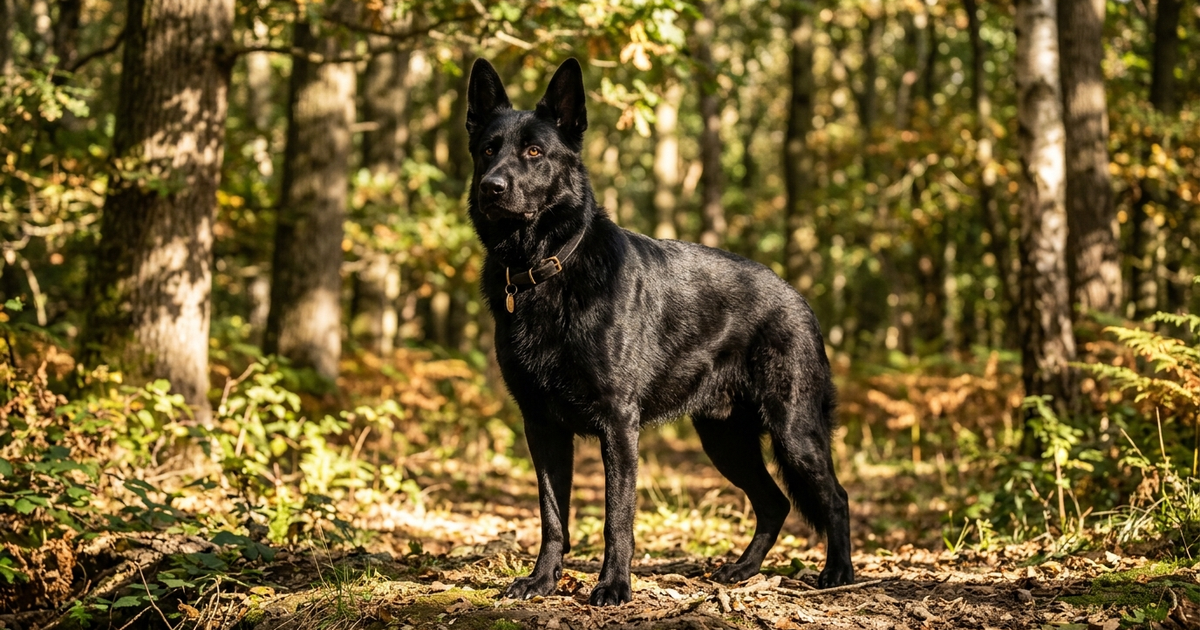
| Black sable | So dark it’s nearly solid black | Often misidentified |
🔍 Reddit Insight: On r/germanshepherd, sable owners frequently post asking “is my dog mixed breed?” because strangers on walks constantly mistake their dogs for wolf hybrids or cross-breeds. Sable GSDs look so unlike the classic saddle-pattern GSD that people assume they can’t be pure German Shepherd. One owner described their silver sable being asked about “at least 10 times a week” if it was part wolf. It’s not. It’s just the original color.
The Color Change: What Nobody Warns You About
This is the part every sable GSD owner wishes someone had told them before they brought their puppy home.
Sable GSDs typically go through three distinct color phases:
Phase 1: Birth to 8 Weeks
Puppies appear tan or golden with minimal dark markings. Many people — including experienced GSD owners — mistake newborn sables for cream or gold-colored dogs.
Phase 2: 3 to 8 Months
The dark-tipped adult hairs start growing in fast. Your golden puppy begins looking like someone painted it from the back forward. Black spread up the spine, across the shoulders, along the face. This is when first-time owners panic and start Googling “my dog is changing color.”
Phase 3: 12 to 24 Months
The adult coat settles. Some sable GSDs end up dramatically darker than their puppy photos suggest. Others stabilize at medium sable. The final shade depends entirely on genetics — you won’t know the result until the dog reaches full maturity.
My own sable GSD was golden at 2 months, looked nearly solid black at 7 months during peak darkening phase, and settled into a deep red sable by his second birthday. It genuinely felt like living with three different dogs in sequence.
🔍 Reddit Insight: This color shift is by far the most common topic in sable GSD posts on r/germanshepherd. The usual thread: “My sable puppy is getting SO dark — is this normal?” followed by dozens of replies with before-and-after photos of dogs that look completely unrelated. The consensus from experienced owners: trust the genetics, enjoy the transformation, take a lot of photos.
Sable Genetics Simplified
The sable pattern is controlled by the Agouti (A) locus, and it holds the most dominant position in the German Shepherd color hierarchy.
Dominance hierarchy at the A locus:
- Aʷ (sable/agouti) — Dominant over all others
- aᵗ (tan point/saddle pattern) — Recessive to sable
- a (solid black) — Most recessive
The Agouti protein manipulates two pigments along each hair shaft: eumelanin (black) deposits at the tips, then switches to phaeomelanin (red/tan) for the lighter base. The result is banded hair — what we see as sable.
What this means practically:
- A sable GSD bred to any other color has a high probability of producing sable puppies
- Two sable parents will nearly always produce sable offspring
- The classic saddle-back pattern only appears when both parents contribute the recessive aᵗ allele without a dominant Aʷ
- Genetic testing reveals whether a sable dog is homozygous (Aʷ/Aʷ) or heterozygous (Aʷ/aᵗ), predicting whether non-sable puppies can appear in litters
Sable in Working Lines vs. Show Lines
The sable pattern carries a very different reputation depending on which GSD community you’re in:
| Context | View of Sable |
|---|---|
| Working line community | The standard. Most working line dogs are sable. |
| German show ring (SV) | Fully accepted and competitive |
| American show ring (AKC) | Less preferred — judges tend to favor saddle patterns |
| General public | Often confused for a “mutt” or “wolf hybrid” |
In Schutzhund, IPO, and European show rings, sable is the dominant color among competitors. In AKC conformation, it’s less common and slightly less favored by judges. Neither fact changes the dog’s quality — just the visual preference in different competitive contexts.
Temperament: Clearing Up the Confusion
Let’s say this plainly: sable is a color pattern, not a temperament.
The reason sable GSDs have a reputation for being “more intense” or “higher drive” is because most working line dogs happen to be sable. It’s a correlation, not a causal relationship.
🔍 Reddit Insight: r/germanshepherd and r/dogtraining discussions describe sable GSDs from working lines as having “a little more life in them” — “always ready,” with heightened environmental awareness that owners call “spidey senses.” But experienced handlers are quick to clarify: the intensity comes from the blood line, not the coat. A sable GSD from a West German Show Line breeder will have a completely different energy profile than one from a DDR working line. Same color, different dogs.
A sable GSD from a show line will be calm, family-oriented, and forgiving. A sable GSD from a Czech working line will need a job, structured daily training, and an experienced handler. Read the bloodline, not the color.
Grooming the Sable Coat
Sable coats have one genuine advantage over other GSD colors: they hide dirt remarkably well. The multi-tonal banding means mud and trail dust blend into the pattern rather than standing out as obvious streaks.
Standard GSD grooming requirements apply:
- Brush 3–4 times per week; daily during shedding season
- Expect heavy coat blows twice per year (spring and fall)
- The sable undercoat is often lighter than the topcoat — you’ll see more cream and tan hair on dark furniture than you might expect
- Bathing monthly (or when necessary) — over-bathing strips protective coat oils
Should You Get a Sable German Shepherd?
Get a sable GSD if:
- You love the wolf-like, natural appearance
- You’re drawn to working line genetics where sable dominates
- You can handle the “what breed is that?” question on every single walk
- You enjoy watching a dog’s look evolve dramatically over their first two years
Consider other options if:
- You want a dog whose appearance won’t change much from puppy to adult
- You plan to compete in AKC conformation (sable is accepted but less favored)
- You’re expecting a very specific shade — sable is unpredictable until maturity
Frequently Asked Questions
Are sable German Shepherds more expensive than other colors?
Not in working line communities, where sable is the most common color and carries no premium. Some show line breeders may charge slightly more since sable is less common in their programs. DDR-specific sables with verified pedigrees can command premiums due to bloodline rarity, not color.
Is sable recognized by the AKC?
Yes, fully. Sable is a standard, accepted German Shepherd color. It’s less frequently seen in American show rings compared to the black-and-tan saddle, but there is no disqualification or penalty for the color itself.
Do sable GSDs get darker or lighter with age?
Most darken significantly between 3–12 months as black-tipped adult hairs replace the lighter puppy coat. After reaching full maturity (typically 18–24 months), the color stabilizes. Some individuals may lighten very slightly in old age.
What’s the difference between sable and “wolf gray”?
“Wolf gray” is a casual descriptor, not a genetics term. It typically refers to silver sable — where the base hair color is gray or silver rather than tan or red. Genetically, both are the same agouti pattern at the A locus.
Can breeding a sable GSD produce non-sable puppies?
Yes, if the sable parent carries a recessive allele. A heterozygous sable (Aʷ/aᵗ) bred to a tan-point dog (aᵗ/aᵗ) will statistically produce roughly half sable and half tan-point puppies. Two homozygous sable parents (Aʷ/Aʷ) will produce only sable offspring.
Ready to find your perfect GSD match?
Take our 2-minute behavioral quiz. We'll match your lifestyle (and patience level) with the exact GSD bloodline and coat type you need — before you bring home a land shark.
Take the Matching Quiz →