Key Takeaways
- The long coat is caused by a recessive FGF5 gene; both parents must carry it to produce long-haired puppies.
- There are two varieties: 'Long Stock Coat' (with an undercoat) and 'Long Coat' (without an undercoat).
- They require 3-4 brushings a week and a forced-air dryer is highly recommended to prevent matting and wet dog smell.
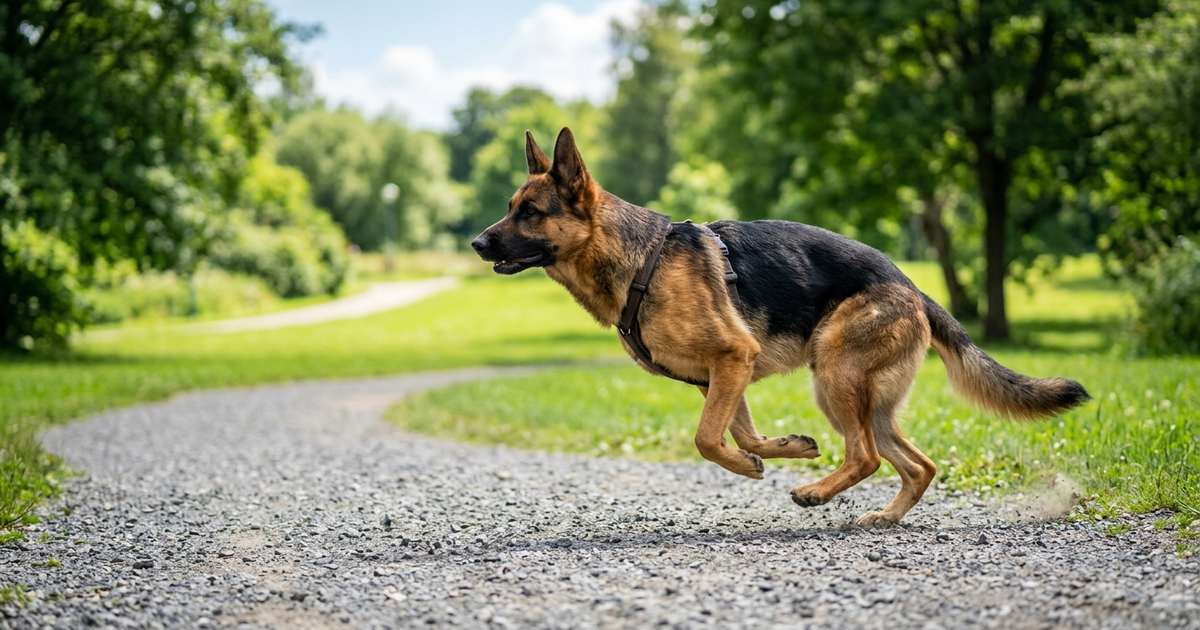
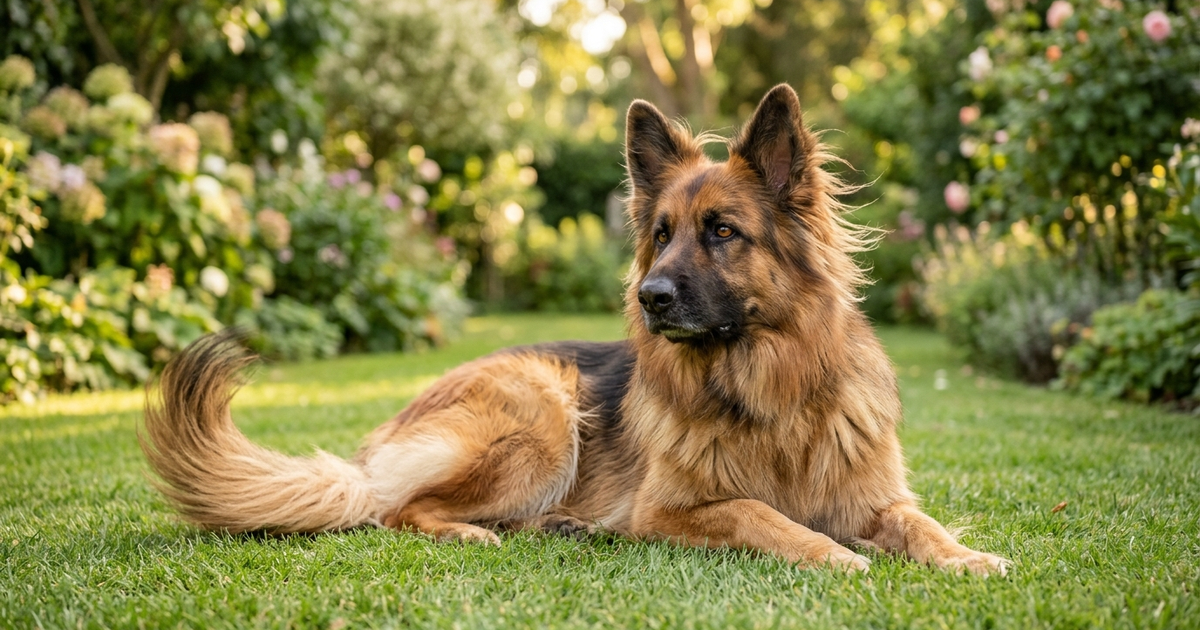
The first time you see a long-haired German Shepherd in person, something happens. The coat moves differently — it flows when they run, catches the light in a way that makes them look almost cinematic. It’s genuinely striking.
Then they shake off after a swim, and you understand what you’re signing up for.
Long-haired German Shepherds are the same dog as their short-coated relatives in almost every measurable way. Same intelligence. Same loyalty. Same protective instincts. But the coat changes the day-to-day reality of ownership significantly, and most articles about them don’t say that directly enough.
This one will.
Genetics: Why Some GSDs Have Long Coats
Long coat in German Shepherds is caused by a single recessive gene at the FGF5 locus. For a puppy to express the long coat, it must inherit two copies of the recessive allele — one from each parent.
This means:
- Two short-coated parents can produce long-coated puppies if both carry the recessive allele
- One long-coated parent guarantees at least one copy, but doesn’t guarantee long-coated offspring without knowing the other parent’s genotype
- Two long-coated parents will produce 100% long-coated offspring
Historical context: For decades, long coat was considered a fault by the SV (Germany’s GSD federation), and long-coated dogs were excluded from German show rings and working certifications. This created two distinct coat populations. In 2010, the SV officially recognized the “long stock coat” as an accepted variety — though the classification remains separate from the standard coat in competition contexts.
The AKC still considers long coat a fault in conformation. The dog can be registered and compete in performance events, but cannot win in conformation.
The Two Long Coat Varieties
Not all long-haired GSDs are the same. There are two distinct long-coat varieties:
1. Long Stock Coat (with undercoat)
- Has the full double-coat structure: dense undercoat + longer outer coat
- Feathering on ears, chest, forelegs, hindquarters, tail
- Better weather resistance than the single-coat variety
- This is the variety officially recognized by the SV since 2010
2. Long Coat (without undercoat) — the old “fault” variety
- Single-coat structure — just the long outer hair
- Notably softer and silkier
- Less weather-resistant (not suited for outdoor working conditions in cold climates)
- Still sheds, but the shedding pattern differs from double-coated dogs
When breeders advertise “long-haired GSDs,” they may mean either variety. Ask specifically which type and whether the dog has a full undercoat.
The Grooming Reality (Honest Version)
Let’s not sugarcoat this: long-haired German Shepherds require a genuine grooming commitment.
Brushing
- Minimum 3–4 times per week for long stock coats
- Daily during spring and fall coat blows
- Focus on friction areas that mat: behind the ears, under the “armpits,” around the collar, on the hindquarters
🔍 Reddit Insight: r/germanshepherd grooming threads for long-haired GSDs consistently recommend against the Furminator for long coats — several owners report it damages the outer guard hairs with extended use. The community’s preferred setup: an undercoat rake for the dense undercoat, a slicker brush for the outer coat, and a wide-tooth metal comb to check for hidden mats. “The comb finding resistance is your early warning system,” as one experienced owner put it.
Bathing
- Monthly bathing is typical for most owners
- Use dog-specific shampoo (pH 7–7.5) — human shampoo strips the coat’s natural oils
- A forced-air dryer after bathing is strongly recommended — it removes loose undercoat, speeds drying dramatically, and prevents the “wet dog smell” that persists when a dense coat doesn’t dry thoroughly
- Never shave a long-haired GSD — the coat provides thermoregulation in both heat and cold. Shaving disrupts this system and can cause coat texture problems during regrowth
Shedding Expectations
Here’s where the honest nuance lives: long-haired GSDs don’t necessarily shed more than short-haired GSDs, but the hair is more visible and harder to manage.
Longer strands clump together, drape over surfaces, and require different removal approaches than the fine, penetrating short hairs of a standard coat. Some owners report finding this easier to manage (you can pick up clumps). Others find the sheer volume more overwhelming.
🔍 Reddit Insight: The shedding debate on r/germanshepherd is ongoing and genuinely mixed. One thread with hundreds of comments landed here: “Short coat hair gets into everything and is nearly invisible. Long coat hair is everywhere too but you can at least see it coming.” The consensus from multi-dog owners who’ve had both coat types: the total shedding volume is similar, but the long coat hair is easier to find and pick up while being harder to remove from upholstered surfaces. Daily vacuuming is the reality for both.
Do Long-Haired GSDs Have Different Temperaments?
No. Coat length has no direct influence on temperament.
This myth circulates because long-coated GSDs were historically more common in show lines (working line breeders actively culled the trait), and show lines tend to have calmer, more family-oriented temperaments. But that’s a bloodline correlation, not a coat-length effect — learn more about the 5 distinct GSD bloodlines.
🔍 Reddit Insight: r/germanshepherd members who’ve owned both coat types with the same bloodline consistently report no personality difference. “Same dog. More floof” is the summary that appears in thread after thread.
If you want a calm family companion, find a show-line GSD with the coat type you prefer. If you want a high-drive working dog, find a working-line GSD. Don’t select by coat length expecting a temperament outcome.
Long Coat and Working Ability
Long coat has historically been associated with reduced working-dog candidacy because:
- The single-coat variety (no undercoat) provides less weather protection
- Long feathering can accumulate debris during field work
- SV exclusion kept long-coated dogs out of working title certifications for decades
With the SV’s 2010 recognition of the long stock coat, this is changing. Long stock coat GSDs can now earn working titles in Germany. Some excellent sport dogs carry the long stock coat.
The coat is a consideration for outdoor working conditions, not a working ability limiter.
Is a Long-Haired German Shepherd Right for You?
Strong yes if:
- You love the aesthetic and are genuinely excited about the grooming routine
- You have time for 3–4 brushing sessions per week
- You’re not competing in AKC conformation
- You can invest in proper tools: undercoat rake, slicker brush, metal comb, forced-air dryer
Think carefully if:
- You underestimated the shedding commitment with any previous dog
- You have a very tidy home and finding dog hair in unexpected places bothers you significantly
- You want a working dog for outdoor field conditions in harsh weather (double-check undercoat presence)
🔍 Reddit Insight: The overwhelming consensus from long-haired GSD owners on Reddit is that they are “100% worth it” — but only if you go in knowing what you’re getting into. The posts from regretful owners almost always have the same opener: “I didn’t realize how much they shed.” The posts from satisfied long-haired GSD owners almost always have this closer: “I can’t imagine having a different dog.” If you’re bringing home a puppy, our GSD puppy survival guide covers what to expect in the first 8 weeks.
Frequently Asked Questions
Are long-haired German Shepherds more expensive?
Often yes. Because long coat is still considered a fault in AKC conformation, show line breeders produce fewer long-coated dogs. This relative scarcity can inflate prices. Expect $2,000–$4,000 from reputable breeders who health test.
Do long-haired GSDs stay warm in winter?
Long stock coats (with undercoat) provide excellent insulation and are well-suited for cold climates. Long coats without undercoat are less weather-resistant. Confirm which variety before assuming outdoor cold-weather suitability.
How do I know if my GSD will be long-haired?
At 6–8 weeks, the puppy coat feels noticeably softer and fluffier than short-coated littermates. Longer feathering on the ears is often visible early. A reputable breeder who has done genetic testing on the parents can predict coat outcomes precisely.
Can I groom a long-haired GSD at home?
Yes, with the right tools. The full professional grooming setup (forced-air dryer, multiple brush types, appropriate shampoo) represents an upfront investment of $200–$400 that pays off over the dog’s lifetime compared to regular grooming appointments. Many long-haired GSD owners learn to manage the coat entirely at home.
Ready to find your perfect GSD match?
Take our 2-minute behavioral quiz. We'll match your lifestyle (and patience level) with the exact GSD bloodline and coat type you need — before you bring home a land shark.
Take the Matching Quiz →